

.tsx files. Say the outcome in plain language; your agent maps it to a Smithers workflow, render → execute → persist, durable, resumable, on any machine. Phrase it well and get a high-quality result running while you’re away; phrase it vaguely and get a one-shot answer when you wanted a campaign.
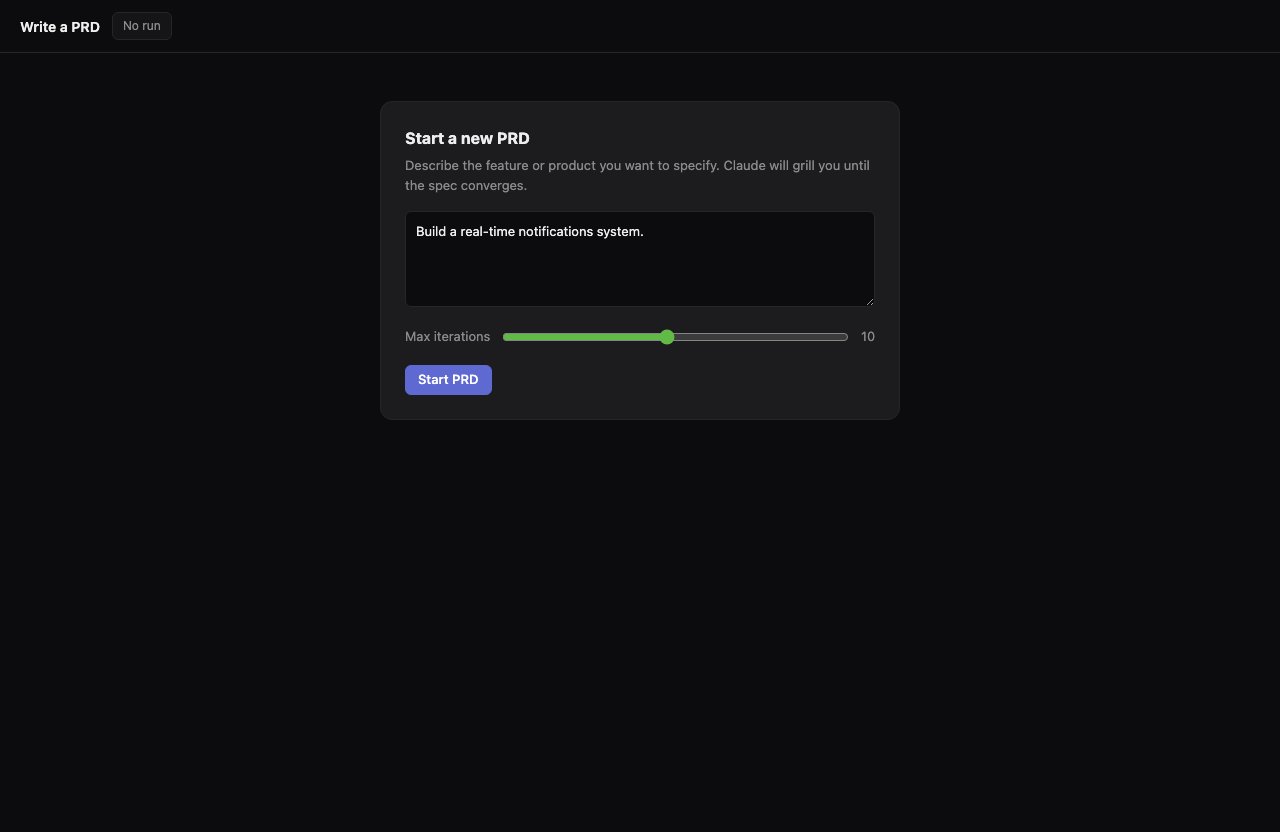
One plain-English request, 'write a PRD', becomes a structured, durable workflow your agent runs on your behalf.
Name the outcome, not the steps
Describe the finished thing and your agent owns the route: say what “done” looks like, and it reaches for the right recipe from the built-in pack.Set the finish line
Add a stopping condition and a one-shot becomes a loop: say “don’t stop until X” and your agent iterates against persisted state until X holds (tests pass, review signs off, a score clears the bar) or hits an iteration cap.“Add account-level rate limiting, and keep iterating until the tests pass and the review approves.”Each pass: write code, run tests, send the diff to a review panel; it exits when tests are green and the synthesized review signs off.
The cap matters: “keep iterating until X” always carries a ceiling so a stubborn condition can’t loop forever. Hit it without satisfying X, and the run stops and surfaces what’s still failing, durable and inspectable, never silently spinning.
Ask for a gate
Say “check with me first” for a durable pause: the run suspends as a row in SQLite, costing nothing for a minute or a week, no process burning, no tokens ticking, until you say the word.“Draft the release blog post, but don’t publish until I approve it.”Your agent writes the draft, then holds at a gate before publishing.
Steer a live run
You redirect by talking to your agent: change your mind mid-run, say so, and it reaches for the right verb,signal to nudge, cancel to stop a run, down to halt everything.
“Stop the kanban run and just focus on the billing ticket instead.”Your agent cancels the
kanban run and kicks off a focused implement run on the billing ticket. You never touched a run ID.
Approve from your seat
A pause is a question waiting for one word: your agent shows you what’s on the table (the plan, the diff, the draft) and parks the run. Answer in plain language: “Approve.” “Ship it.” “No, redo the auth section first.”“approve”The gate clears, the run wakes, and the next stage executes against everything persisted, no re-running the work already done. Deny instead and, depending on how the gate was set, the run stops, skips that step, or loops back.
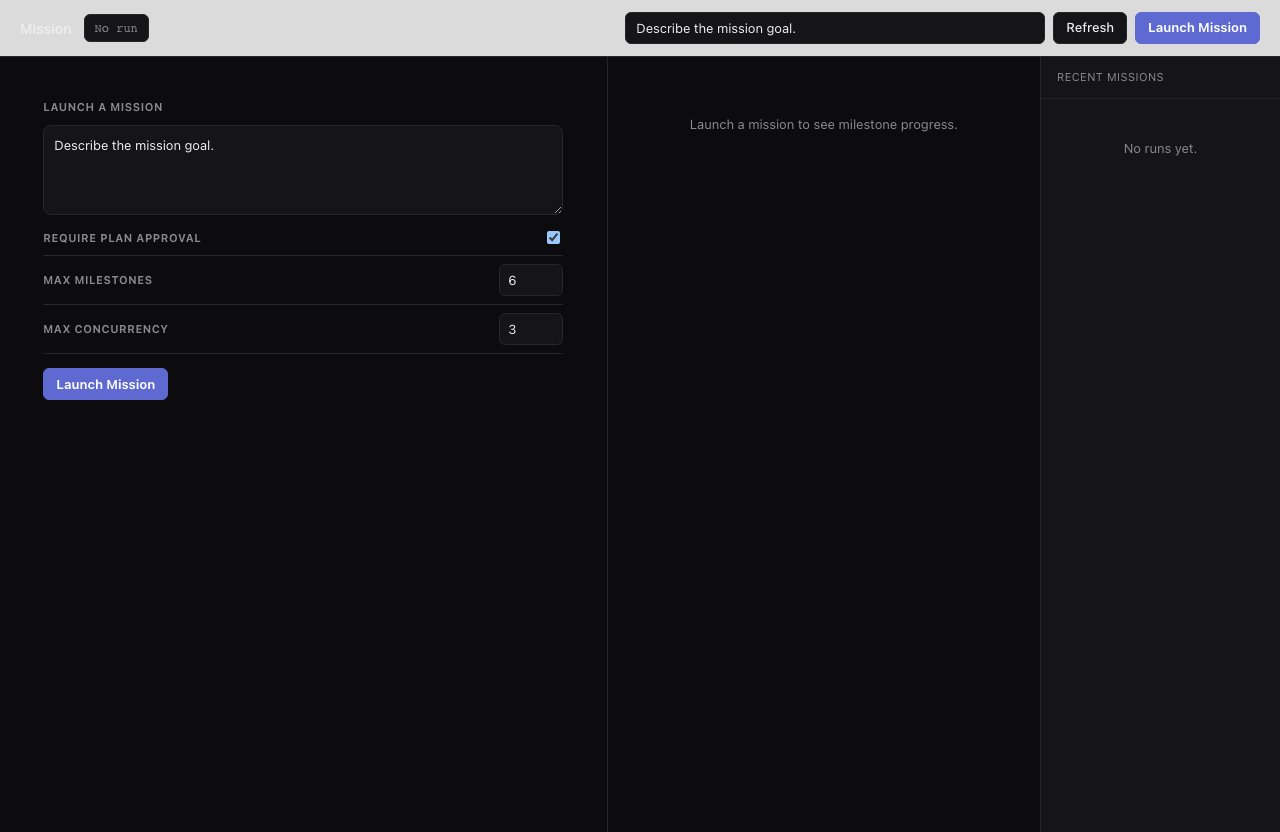
A mission run renders its stages and gates as discrete, inspectable steps, so when it pauses for you, you see exactly what you're approving.
When not to hand it off
Don’t reach for Smithers when a single prompt already gets you there: one question with one answer, or a quick edit, just ask your agent directly. A workflow earns its keep when work spans stages, needs a finish line, needs approval mid-flight, or should keep going while you’re away.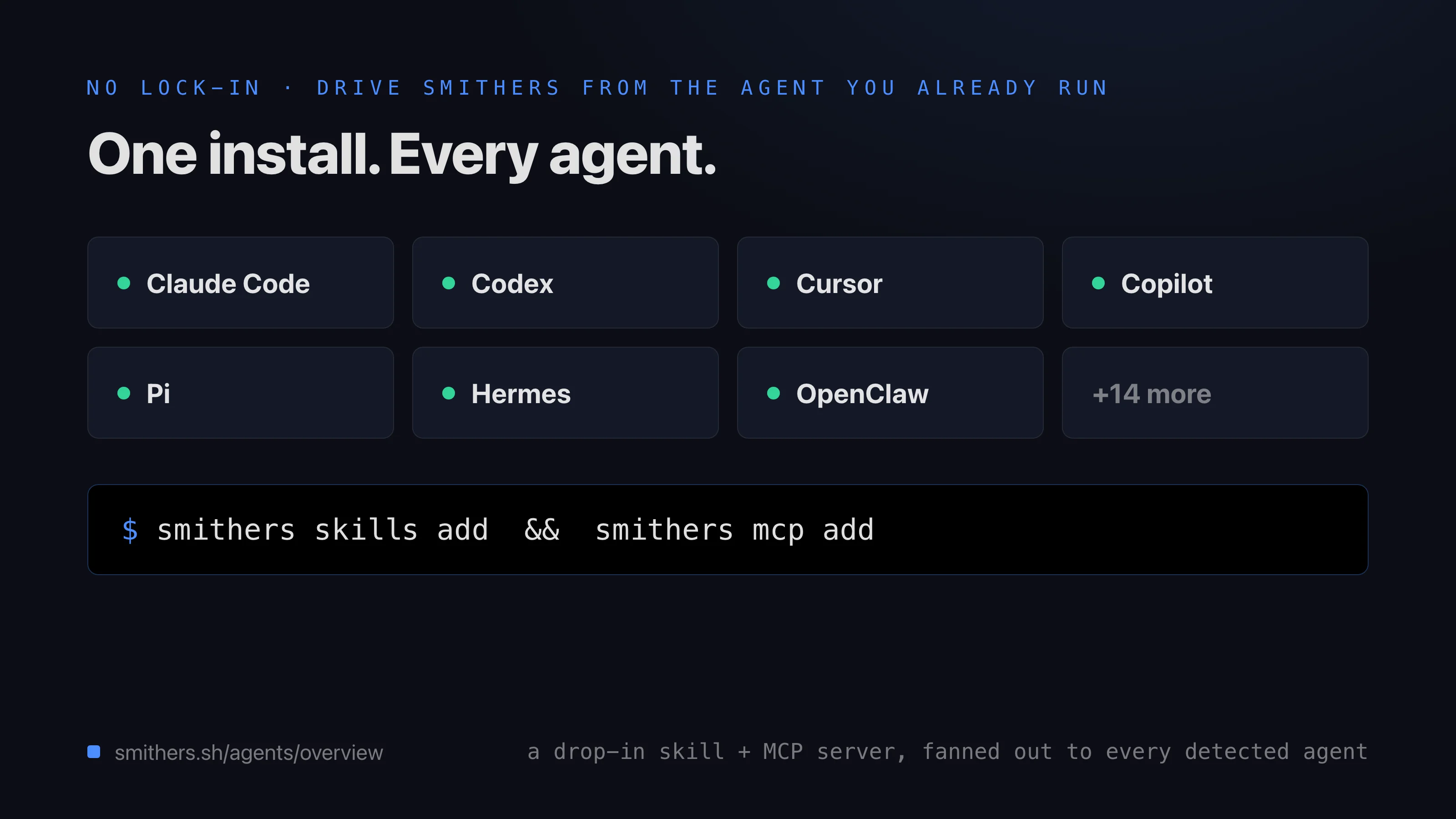
The same prompt-driven flow works across Claude Code, Codex, Cursor, and more: any agent, any model, any machine.
Read next
- Watch and steer (how-to): follow a run once it’s going, clear gates, and redirect it in flight.
- What you can do (reference): the outcome catalog and the exact words that trigger each workflow.
- The few concepts you need (explanation): the vocabulary behind durable runs, gates, and loops.
- Agents and the CLI (under the hood): the models your workflows can drive and the verbs your agent runs for you.