

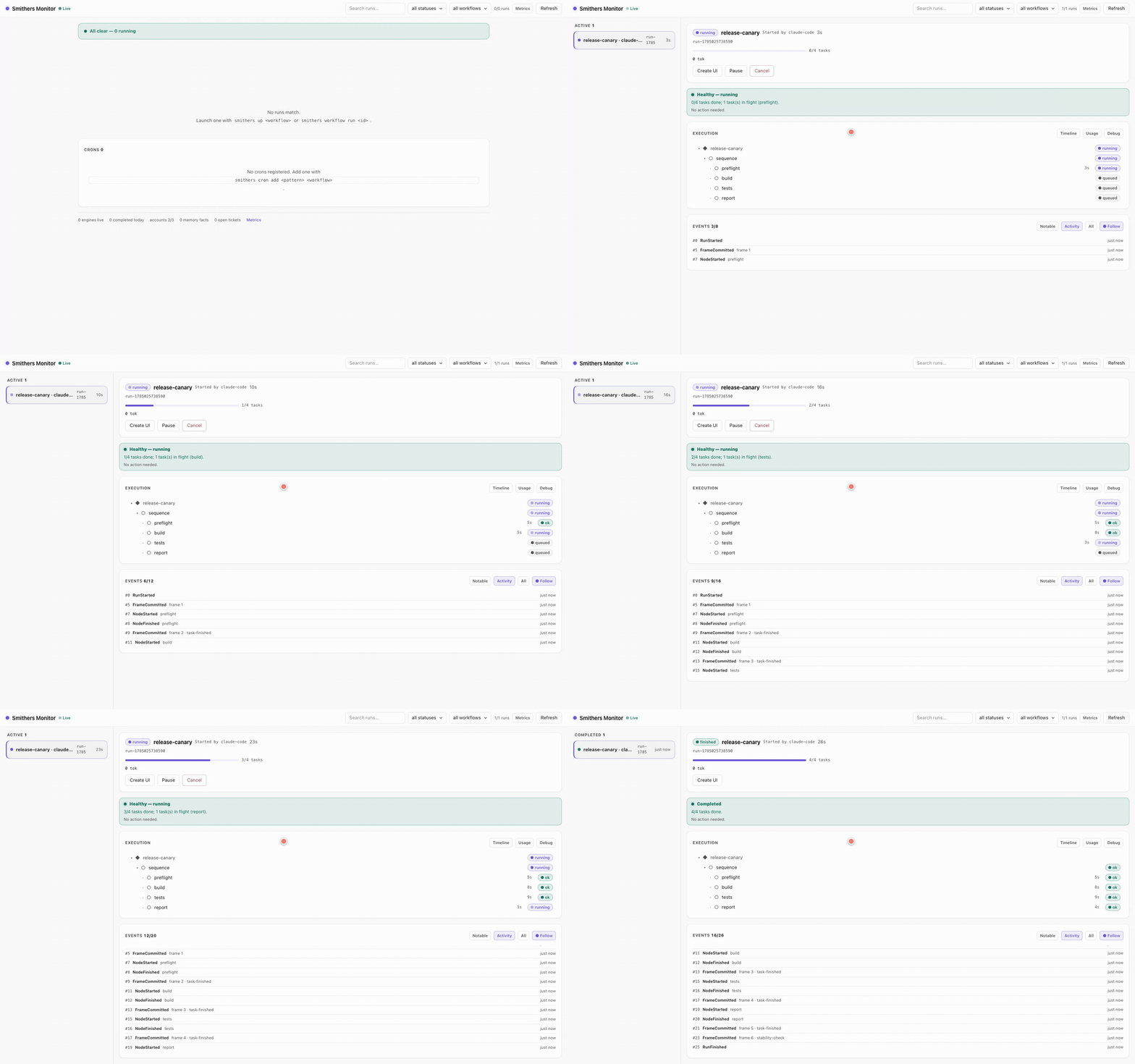
A release-canary run streaming through the Monitor: the health banner, execution tree, and event feed update live until the run lands on Completed with 4/4 tasks done.
Upgrading
Time travel that respects side effects
The danger was never the state Smithers owns; it was the state you touched along the way: the Slack message, the deploy, the charge. Mark a task whose callback changes the outside world, and register compensation:- Rewind, fork, replay, and
jumpToFramerun an effect-boundary guard. Crossing a marked effect triggers its revert handler; an effect with no way to compensate blocks the operation with a new error code,TIME_TRAVEL_SIDE_EFFECT_BLOCKED, instead of quietly re-firing it. - The diagnosis follows you everywhere.
rewindandtimetravelprint the effect-boundary report;why,status, and the MCP tools expose the same diagnosis; and the Gateway RPC surface acceptsforceandnoRevertand returns aneffectBoundaryreport so custom run UIs can render the guard. - The journal is observable. The
SmithersEventunion gains side-effect journal event types, so dashboards and OTLP exporters see effect transitions as they happen.
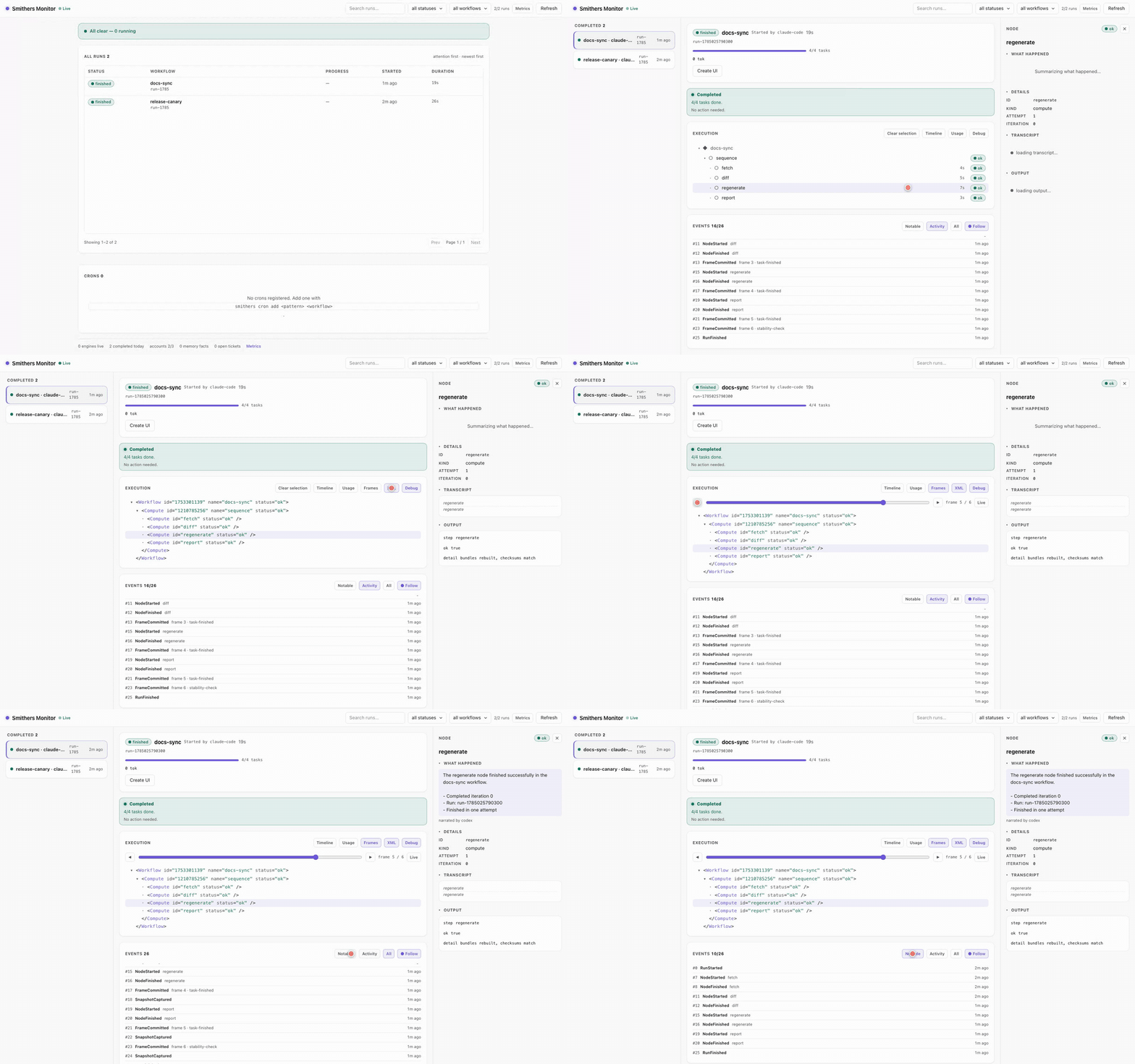
Inspecting a finished run in the Monitor: the execution tree, the node inspector with transcript and output, Debug power tools with the engine XML view, and frame-by-frame scrubbing with the Frames control.
authoring-side-effects eval suite (70
fixture workflows plus handwritten cases and a harness) and a
gradeSideEffectCompliance scorer statically grade whether a workflow
marks and reverts its side effects.
See the external side effects section of the
Task docs and the
time-travel quickstart.
Claude Opus 5 becomes the default implementer
If you use the shipped registry defaults rather than a customagents.ts, the model doing most of your work changed. SOTA registry v7
routes the implement and smart seats in CLI-generated agent pools to
Claude Opus 5; registry v6, also in this release, had already handed it
the orchestrator seat that Claude Opus 4.8 held. GPT-5.6 Sol and Terra
move to the review, validation, and checking seats.
- Cost scoring prices
claude-opus-5at 25 per million output tokens, the same as Opus 4.8. smithers oneshotfalls back in a new order: Claude Opus 5, then Codex Sol, then Kimi K3, then Claude Fable 5.
Point Opus 5 at your open issues
The newopus5-bug-sweep pack workflow applies the routing change:
Claude Opus 5 triages your open GitHub issues, fixes the straightforward
bugs in parallel jj worktrees, lands each fix through a serialized
compare-and-swap merge queue, gates the result with install, typecheck,
and lint in a scratch worktree, then pushes main and closes the issues.
It ships with a live UI.
Docs for humans, docs for agents
The docs site now separates its two audiences. The Product API tab is for you: a Platform Capabilities catalog of what you can ask for in plain English, setup pages for each harness (Claude Code, Codex, Cursor, Copilot, Pi, Hermes, OpenClaw), and a Set Up Semantic Memory page covering Hindsight andHINDSIGHT_URL. The Technical API tab is the agent-facing
reference, and its entry pages now say so.
Other improvements
- Every
@smithers-orchestrator/uicomponent has a browsable catalog: 47 stories at storybook.smithers.sh. - Launching Smithers from the Claude Code native Workflow tool no
longer crashes. That tool’s script sandbox defines no Node globals,
so the mirror script stopped referencing the bare
processglobal.
Upgrade notes
- DB migrations 0031 (the side-effect journal) and 0032 (tool-call tokens) run automatically through the existing schema-migrations runner the first time an upgraded CLI touches a workspace. No manual steps.
sideEffectis opt-in. A workflow that never sets it has no effect boundaries, so rewind, fork, and replay behave exactly as before.- Shipped registry defaults now route the implement, smart, and
orchestrator seats to Claude Opus 5, and
oneshotprefers Opus 5 before Codex Sol, Kimi K3, and Claude Fable 5. A customagents.tsis unaffected.
The full changelog
The complete commit-level history for this release is in CHANGELOG.md. Found a bug? Runbunx smithers-orchestrator bug to file it.